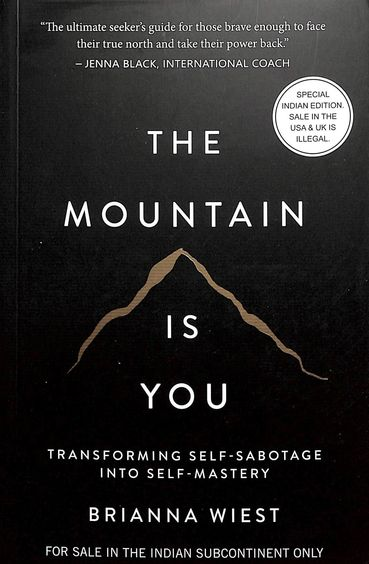

If there’ any book I would want to read over and over again to make sure I remember what it teaches me, it’s probably this book.
“I really needed it” – that’s what anyone would say after reading it.
It teaches you how to handle yourself better by pouring wisdom about human nature that creates the problem for themselves in the first place. It talks about self sabotage, uprooting ( pattern that we create by not moving forward), perfectionism, emotion, pride, judgments, guilt of success and everything that comes in our way, created by ourselves to stop us from thriving.. whether in life, career, business or relationships.
It also helps in calming your emotions, separating your emotional self from your rational self. Helps you to know yourself better and get you out of your own way.
It’s quite enlightening and definitely not over-rated.
It’s worth the read and I highly recommend it. Especially for women who deals with high emotions, managing their business and career as well as relationships at the same time. It’ll help you to clear your mind and make better and more rational decisions.
But of course it’s for all genders. If you want to understand human nature that sabotages their own life and relationships and how to change it, what are the solutions of it, then you must read this book.
Who The Mountain Is You not for and Is Really For
The Mountain Is You is not a book for people searching for quick motivation or simple life hacks. It is a book for those who feel stuck despite knowing what they should do. It is for individuals who repeatedly find themselves facing the same problems, emotions, fears, and patterns, wondering why change seems so difficult even when they genuinely want it.
The title itself carries a powerful message. The “mountain” is not an external obstacle, another person, or a difficult circumstance. The mountain is ourselves—our fears, limiting beliefs, unresolved emotions, and habits of self-sabotage.
The book argues that many of the barriers preventing us from living the lives we desire are often internal rather than external. This idea can be uncomfortable, but it is also empowering because it means change is possible.
This book is especially valuable for people who feel trapped in cycles of overthinking, procrastination, self-doubt, or emotional avoidance. Many readers may recognize themselves in the experience of wanting something deeply—a healthier relationship, a better career, greater confidence—yet unconsciously acting in ways that prevent those goals from becoming reality. Rather than judging these behaviors, the book seeks to understand them. It explains that self-sabotage is often a protective mechanism developed in response to past experiences, fears, or unmet emotional needs.
and Why It Is Worth Reading
One reason to read The Mountain Is You is that it encourages self-awareness. Instead of focusing solely on external success, it asks readers to examine their inner world. The book invites people to question their assumptions, understand their emotional triggers, and identify the hidden beliefs that shape their decisions. Through this process, readers may begin to see that many of their struggles are not signs of weakness but signals pointing toward areas that need healing and growth.
Another reason the book resonates with many readers is its emphasis on personal responsibility. It does not suggest that life is easy or that every problem is self-created. Rather, it highlights the power individuals have in choosing how they respond to challenges. The book teaches that while people cannot always control their circumstances, they can work toward understanding themselves and changing their patterns of behavior.
Perhaps the greatest strength of The Mountain Is You is its message of transformation.
The book presents growth not as becoming someone entirely different but as becoming more fully oneself. It suggests that overcoming self-sabotage is not about fighting against who we are; it is about understanding ourselves deeply enough to stop standing in our own way.
Ultimately, this book is for anyone who senses that the greatest challenge in their life is not a lack of opportunity, talent, or intelligence, but an internal struggle that keeps them from moving forward.
It is worth reading because it offers a thoughtful exploration of why people hold themselves back and how they can begin the difficult yet rewarding process of overcoming their own mountains. The book reminds readers that the path to freedom, fulfillment, and growth often begins not by changing the world around them, but by transforming the relationship they have with themselves.
Conclusion:-
If I had to choose a few key words that capture the essence of The Mountain Is You, they would be:
1. Self-Sabotage
The central idea of the book is that people often become their own biggest obstacle. The “mountain” represents the habits, fears, and unconscious behaviors that prevent growth.
2. Transformation
The book is not just about identifying problems; it is about turning pain, fear, and limitations into personal growth. The mountain is meant to be climbed, not avoided.
3. Self-Awareness
Before change can happen, a person must understand why they think, feel, and act the way they do. The book repeatedly emphasizes looking inward.
4. Healing
Many self-destructive patterns come from unresolved emotional wounds. The book argues that lasting change comes from healing rather than merely forcing discipline.
5. Responsibility
The author encourages readers to take ownership of their lives. This does not mean blaming themselves for everything, but recognizing their power to choose their response and direction.
6. Resilience
Growth requires facing discomfort instead of running from it. The book teaches that strength develops through confronting challenges.
One Word That Best Describes the Entire Book:
“Self-Mastery.”
Because the book is ultimately about overcoming the inner obstacles that stand between who you are and who you want to become. The mountain is you—but so is the climber.